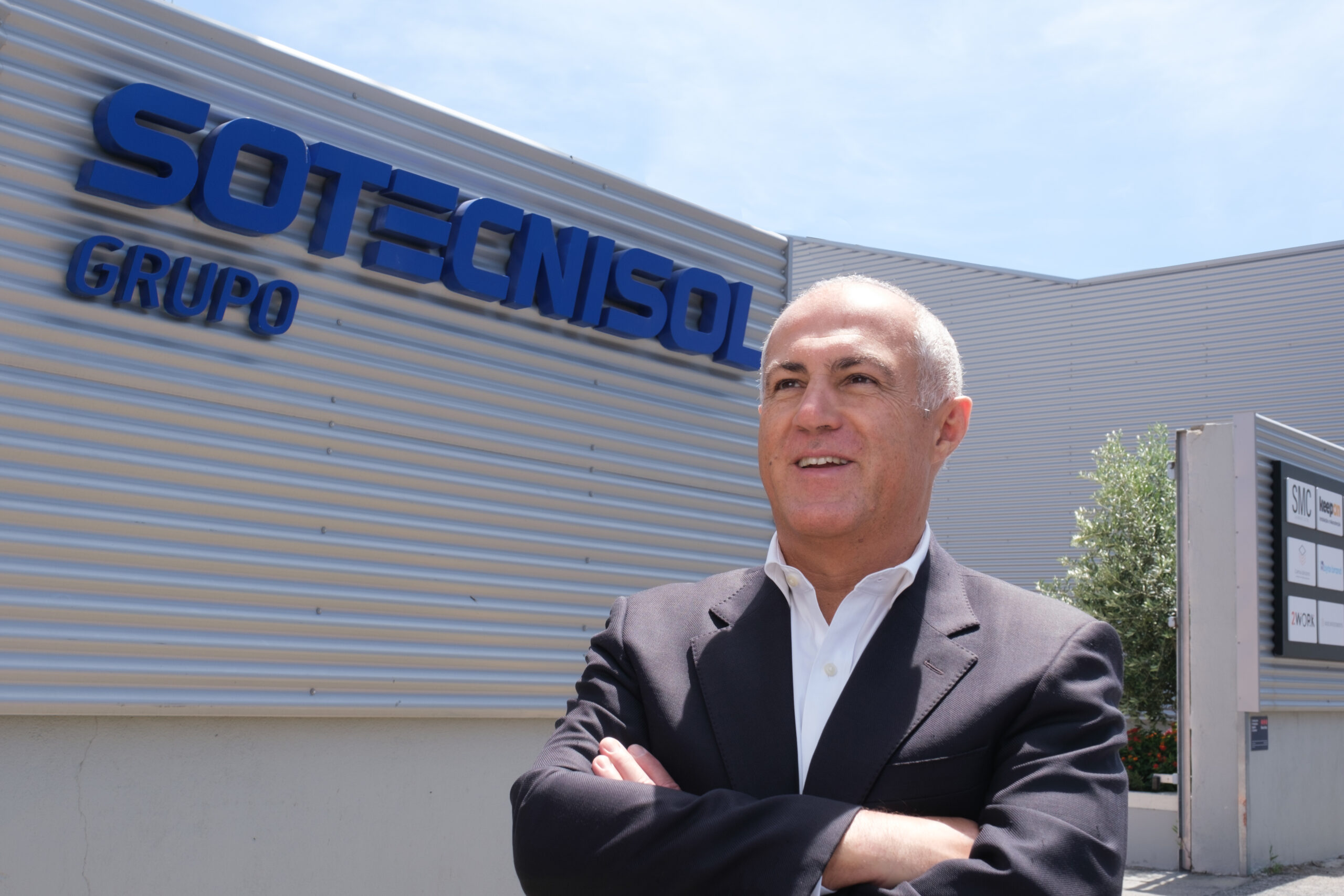
In a context where Portugal’s construction sector faces structural challenges—ranging from a shortage of skilled labor to pressure on costs, deadlines, and environmental requirements—companies are called upon to invest in innovation and efficiency to remain competitive.
With 55 years of operation, Sotecnisol Group has established itself as one of Portugal’s most versatile companies in the fields of construction, energy, the environment, water, and agribusiness, with operations in Portugal, Spain, France, Angola, and Mozambique.
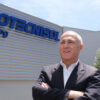
In this interview, José Luís Castro looks back on the key milestones in the group’s history, discusses its growth and internationalization strategy, and shares his perspective on the challenges and opportunities facing the construction industry in the coming years.
The Sotecnisol Group is celebrating 55 years in business. What milestones do you consider most significant in its development?
Over the course of these 55 years, there have been several pivotal moments. One of the most important was when we decided to be geographically closer to our clients by opening several branch offices over the years. Today, we have a presence in seven locations across the country: Lisbon, Leiria, Coimbra, Porto, Gaia, Palmela, and the Algarve, and later this year we will open a new branch in Vila Real. Another key milestone was our international expansion. In addition to Portugal, we have a presence in Spain, France, Angola, and Mozambique. This international expansion has raised our internal standards, strengthened our capabilities, and consolidated the Sotecnisol Group as a player with global reach and ambition.
He joined the company in 1992, when the situation was very different. What were the key factors behind the transformation into the group we see today?
When I joined, we were a company with annual revenue of about 6 million euros. By 2026, we will be a group comprising more than 20 companies and will reach approximately 100 million euros in revenue. This growth is the result of a profound transformation—we started as a company specializing in waterproofing, and today we operate in an integrated manner across the construction and engineering, renewable energy, human resources, and agribusiness sectors, offering virtually every specialty in the construction industry, ranging from waterproofing, ventilated facades, electrical work, HVAC, window and door systems, to the sale of materials through obras360.pt, among many others.
How would you describe the group's strategic positioning in the construction industry today?
We position ourselves as a ‘one-stop-shop’ partner in the construction industry. The integration of different specialties into a single project is ensured through cross-selling strategies that foster synergies among the Group’s various companies. This approach allows us to offer comprehensive and coordinated solutions, with greater efficiency in construction management, better control over deadlines and costs, as well as an integrated technical response. This multidisciplinary capability is one of our key differentiators in the market.
What role does an international presence play in the growth and diversification strategy?
In Portugal, we have a strong presence, with offices and projects from north to south. Internationally, we’re seeing a growing presence in Spain and France. In Spain, we have offices in Madrid and Barcelona. In France, we are headquartered in Paris and carry out projects in various regions; for example, we recently participated in the expansion of the Toulouse Metro, a project with high technical demands. In addition, we also have a presence in Angola and Mozambique.
The international market—particularly the French market—is extremely demanding, which compels us to constantly raise our standards and allows us to bring back knowledge and skills that we apply in Portugal. A clear example of this was obtaining ASQUAL certification—the most rigorous certification in the waterproofing sector and a requirement for carrying out projects in France—making us the only company in the Iberian Peninsula with this accreditation.
How do the various companies in the group work together, and which synergies have been the most significant?
The most significant synergies have occurred primarily in two main areas. On the one hand, roof renovation combined with the installation of photovoltaic systems, where we are able to simultaneously improve the building’s exterior and its energy efficiency. This combination has been particularly valued by clients because it addresses two needs in a single project.
On the other hand, there is a strong synergy between ventilated facades, window frames, and waterproofing. This combination of expertise enables the Sotecnisol Group to work on the entire building envelope, ensuring an integrated approach in terms of thermal performance, watertightness, and durability.
In addition, every construction project offers the opportunity to create synergies with Obras360, our building materials distribution company, where customers can find virtually all the materials needed for any construction project—whether through our online platform or at one of our seven brick-and-mortar stores—with the added benefit of direct delivery to the job site via a crane truck.
What were the main drivers of the recent growth in revenue, and which areas show the greatest future potential?
Growth in 2025 was driven by the outstanding performance of several Group companies across various sectors, reflecting the strength and strategic diversification we have been building.
I would like to highlight, first and foremost, Obras360, which ended the year with revenue of 20 million euros. Sotecnisol Coberturas e Fachadas, a specialist in building envelope solutions—including waterproofing, insulation, and the restoration of roofs and facades—also performed very well, reporting revenue of 15 million euros. 2WORK, a company specializing in temporary staffing, also experienced very significant growth, reaching 8 million euros in revenue in 2025.
In terms of future potential, we believe that the renewable energy and construction industrialization sectors will continue to be drivers of growth.
What infrastructure investments are planned for the short and medium term?
In terms of planned short- and medium-term investments, I would highlight four strategic investments: Expansion of Output—the Group’s construction company—into the Algarve; Opening of a new branch in Vila Real; Entry into the window and door manufacturing business; Opening of 2WORK, the Group’s temporary staffing agency, in Porto, strengthening our proximity to clients in the North.
How do you assess the current state of the construction and infrastructure sector in Portugal?
The sector continues to grow, driven by public and private investment. This is an opportunity that should be seized with strategic foresight.
Which innovative projects or solutions would you highlight as the most transformative within the group (in the construction sector)?
The industrialization of construction is one of our strategic priorities. It allows us to address labor shortages and improve predictability, quality control, and efficiency in meeting deadlines.
By shifting production to controlled environments, such as prefabrication facilities, we reduce waste and risks and increase productivity. This approach is in line with Construction 4.0, which is based on digitization, automation, and modularity.
The partnership with Trina Green Hydrogen could position Portugal as a leader in green hydrogen. What impact do you anticipate for the construction sector and for Sotecnisol?
The partnership with Trina Green Hydrogen could accelerate the creation of a national green hydrogen ecosystem, with a direct impact on industry and the construction of new energy infrastructure. For the Sotecnisol Group, this represents an opportunity to participate in technically advanced projects, strengthening its expertise in energy and sustainability.
How do you integrate sustainability and decarbonization into your various areas of activity, particularly in the construction sector?
We are the only group in Portugal that offers a complete ‘turnkey’ service for roof rehabilitation and the installation of solar power systems. This means we handle waterproofing, insulation, structural reinforcement, solar panel installation, and maintenance, ensuring an integrated solution.
This approach reduces emissions, improves energy efficiency, and increases the durability of buildings. We also integrate solutions for electric mobility, energy efficiency, and more sustainable materials, actively contributing to the decarbonization of the sector. In addition, we also develop PPAs (Power Purchase Agreements). These contracts consist of a long-term agreement through which the customer purchases renewable energy produced by a solar power plant at a predetermined price, typically without the need for an initial investment on the customer’s part.
Given the shortage of skilled labor, how can we attract and retain talent in the construction industry?
Attracting and retaining talent rests on three pillars: ongoing training, professional development, and stability. The Sotecnisol Academy plays a central role in this process, ensuring technical expertise and career advancement. We are also committed to providing good working conditions, a culture of collaboration, and challenging projects.
How do you foresee the construction sector evolving over the next five years, in Portugal and in the markets where Sotecnisol operates?
Over the next five years, the sector will become increasingly technology-driven, sustainable, and industrialized. Digitalization, modular construction, energy efficiency, and renewable energy will gain significant prominence. In the markets where we operate—Portugal, Spain, France, and Africa—we anticipate growth, but also stricter technical and regulatory requirements. The Sotecnisol Group will continue to position itself at the forefront, combining expertise and innovation to meet the challenges of the future.
Learn more here.